Isfar Baset, MS ’25
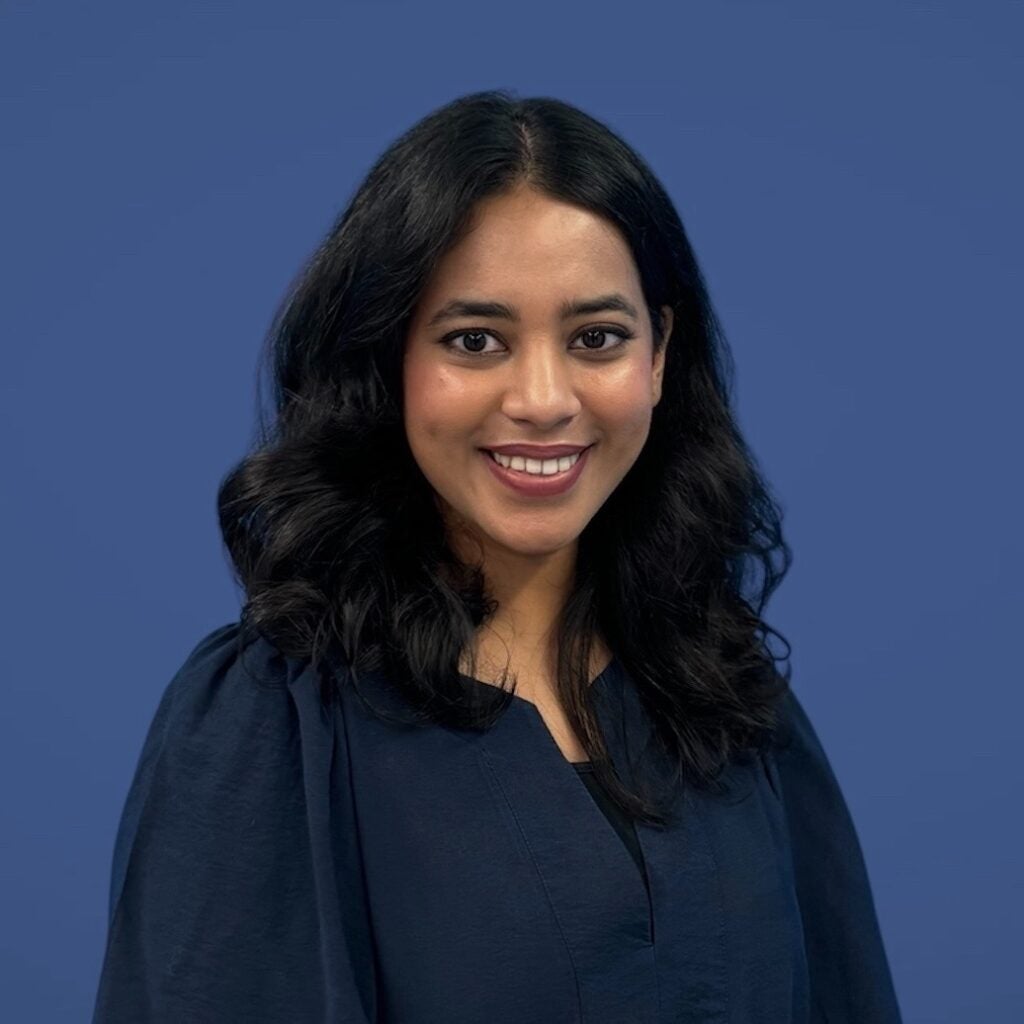
What drew you to the Georgetown MS Data Science and Analytics program?
Mostly the depth of the curriculum. A lot of programs teach you which tools to reach for, but DSAN taught the reasoning underneath them. I also liked how deliberately the program was organized – everyone builds the same foundation first, and only once you actually understand the landscape do you branch into a specialization. That sequencing matters. Being in DC was the other draw because you’re surrounded by organizations doing serious work with data, so the program never feels far from the field it’s preparing you for.
What was the best career advice you received while in the DSAN program?
Communicate, don’t just compute. The model isn’t the deliverable. Nobody outside your immediate team is going to evaluate your feature engineering, but they’re going to evaluate whether they understood what you told them and whether it changed a decision. That reframed how I work. I now spend as much time on how a result is framed and explained as I do on producing it, and it’s probably the single habit that’s paid off most.
What was your favorite DSAN course at Georgetown?
Computational Linguistics, with Professor Trevor Adriaanse. It was the course where I got to see what’s actually happening under the hood in NLP instead of calling a library and trusting the output. The course was designed with real thought and intention, where each assignment built on the last, and the projects were genuinely fun to work on rather than something to get through. It also made me revisit core Python ideas I thought I already knew and then move on to much more advanced ones. That combination of going backward to solidify fundamentals and forward into harder material is exactly what I was hoping to get from the program.
Do you have any advice for current DSAN students?
Three things. Start building early – don’t wait for a capstone to have something to show. Turn your coursework into real projects from the first semester, because those are what you’ll actually talk about in interviews. Second, prioritize fundamentals. The tool landscape turns over constantly, and the people who adapt fastest are the ones who understood the underlying ideas in the first place. Third, stay genuinely curious and chase the problems the classroom doesn’t always have time for. Side projects built around your own questions teach you things a syllabus can’t, and they push you to find creative, practical solutions on your own terms. That habit compounds well beyond graduation.
What’s your favorite analytics or AI tool to use in your daily work, and why?
Databricks. What I appreciate is how much it collapses into one place, from the data and pipelines to Genie for natural-language querying, LLM and agent work, and Asset Bundles for CI/CD. I’m not stitching together five environments and losing context between them, and the path from a prototype to something running in production is short. That shortness is the real value, since it means you iterate on the actual problem instead of on the infrastructure.
What are you working on right now (if you can’t share a current project, maybe a recently completed one)?
Most of my current work lives in the Databricks ecosystem, spanning building and maintaining data pipelines, enabling self-serve analytics through Genie so stakeholders can get answers without waiting on me, and building LLM- and agent-based tooling on top of that foundation. A lot of the recent effort has gone into the engineering discipline around it, using Databricks Asset Bundles to get proper CI/CD in place so deployments are repeatable and reviewable rather than manual.
If you could have any superpower, what would it be, and why?
Instant learning. Being able to pick up any skill or subject the moment I decided to. Part of why I went into this field is that it rewards curiosity but constantly outpaces the time you have to satisfy it. There’s always another paper, another framework, another domain you’d understand your data better if you knew. Being able to close that gap on demand would be the most useful thing I could ask for.