Samuel Villarreal
Why did you choose the DSAN program at GU?
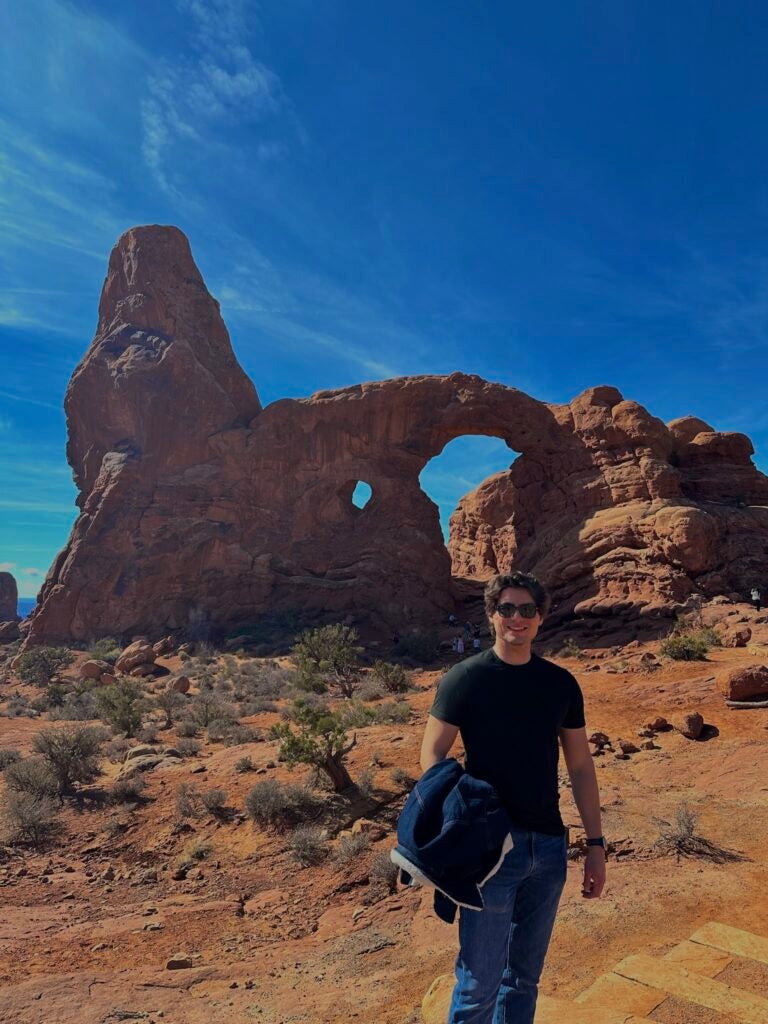
When I was applying, the DSAN program at GU stood out to me because it had just launched an AI concentration that very few comparable programs offered at the time. I was already drawn to data science and analytics, but the chance to build real depth in AI alongside them is what made me choose the program.
Who had the greatest influence on your career path/education path?
My mom, without question. She has been the pillar of my motivation to keep moving forward. From her I learned many valuable things, but primarily resilience, persistence, and discipline. I owe everything I am to her.
What is your favorite class in the DSAN program?
Neural Networks and Advanced Deep Learning. It’s the best course I’ve taken for understanding how AI actually works behind the scenes. Digging into the mathematical foundations of large language models (calculus, statistics, and linear algebra all merging together) has been fascinating to dive into. There’s something exciting about understanding what’s happening under the hood of the models everyone talks about nowadays.
Any advice you’d give prospective students?
Embrace the change. Whether you’re coming from right around the corner or from the other side of the world, let yourself be excited about everything you’re going to learn while being here, and how that knowledge will help you shape your life and the community around you.
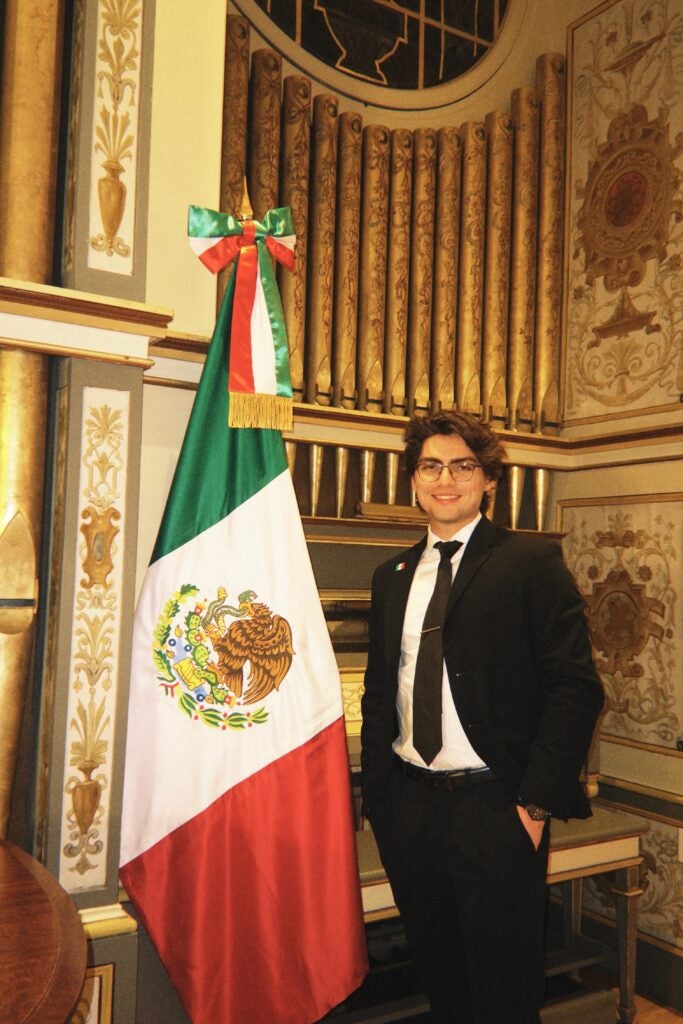
With your background in accountancy, what drew you to data science?
I’ve always loved working with numbers, so moving from accounting into data science felt like a natural next step, a chance to take that same comfort with numbers into more complex and open-ended tasks.
Favorite way to spend your free time?
Walking around the city. D.C.’s grid layout makes it one of the best places to explore on foot. You can wander for hours and always find something new.
If you could have any superpower what would it be, and why?
Teleportation, easily. I love to travel, but there are so many places on my list I haven’t reached thus far. Being able to drop into a new city at sunrise and be home by midnight? That would be spectacular.
Current Research Work:
Under the leadership of Dr. Qiwei Britt at the AI Measurement and Data Science (AIMD) Lab at Georgetown University, I research how virtual reality is being used in educational assessment, specifically VR as a tool for measuring what learners know and can do, not just as a medium for teaching. Drawing on a Web of Science dataset of 535 peer-reviewed studies published between 2015 and 2025; I use natural language processing and topic modeling methods to surface the major themes in the literature and trace how they’ve evolved over time. This research covers which constructs VR can actually assess, what behavioral and process data it captures, and whether studies report the validity, reliability, and fairness evidence that sound measurement depends on. The goal is a clear literature-review-ready synthesis that maps where the field stands today and points to the questions still worth pursuing.