Student Perspectives: Attending the AERA Conference: From Submission to Presentation
By Yuxi Shen, ’26 and Samyukta Vakkalanka ’26
Yuxi Shen
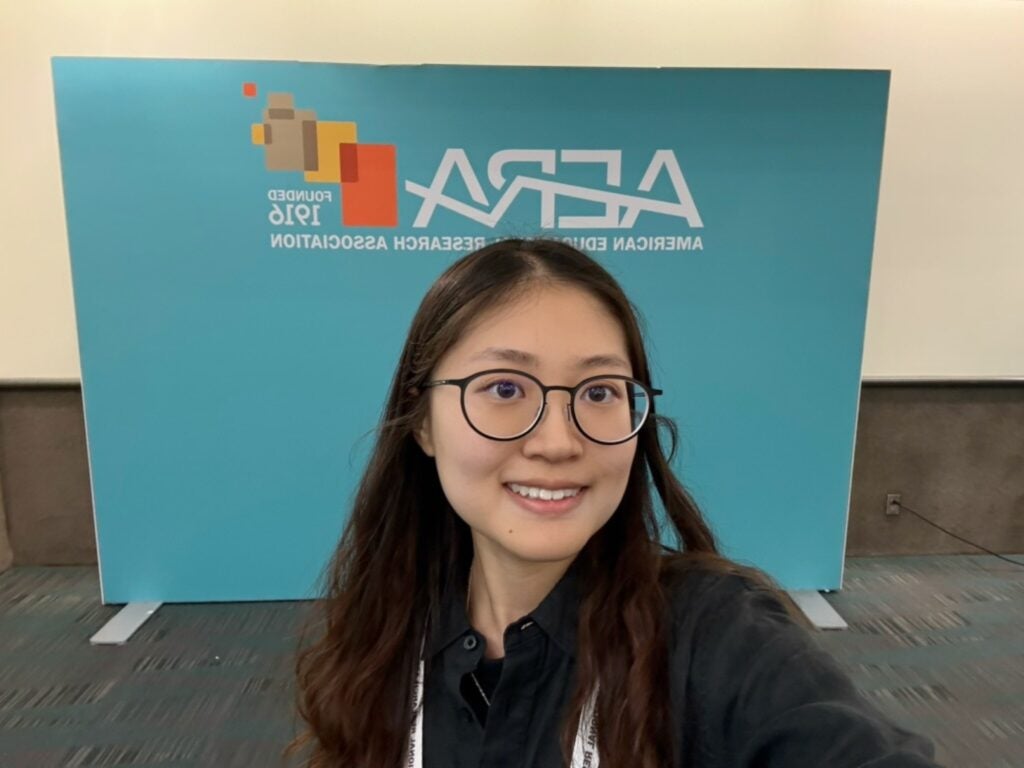
When I first saw the call for submissions on social media and started thinking about applying to the American Educational Research Association (AERA) Annual Meeting, I began by carefully reviewing the call for proposals and considering how my current research could align with the conference themes. I worked closely with my advisor, Professor Qiwei (Britt) He, to identify the most appropriate division and submission format, and then gradually shaped my projects into proposals. This process involved clearly articulating my research questions, methods, and expected contributions, which was more challenging than I initially expected. I went through several rounds of revisions based on feedback from Professor Britt, and this process helped me refine both my writing and my understanding of the project itself. Throughout these iterations, I found it helpful to practice by anticipating potential questions from the audience and using them to strengthen my proposal further. Submitting the proposal felt like an important milestone, and after acceptance, I continued to develop my work into a presentation that could communicate my ideas clearly to a broader academic audience.
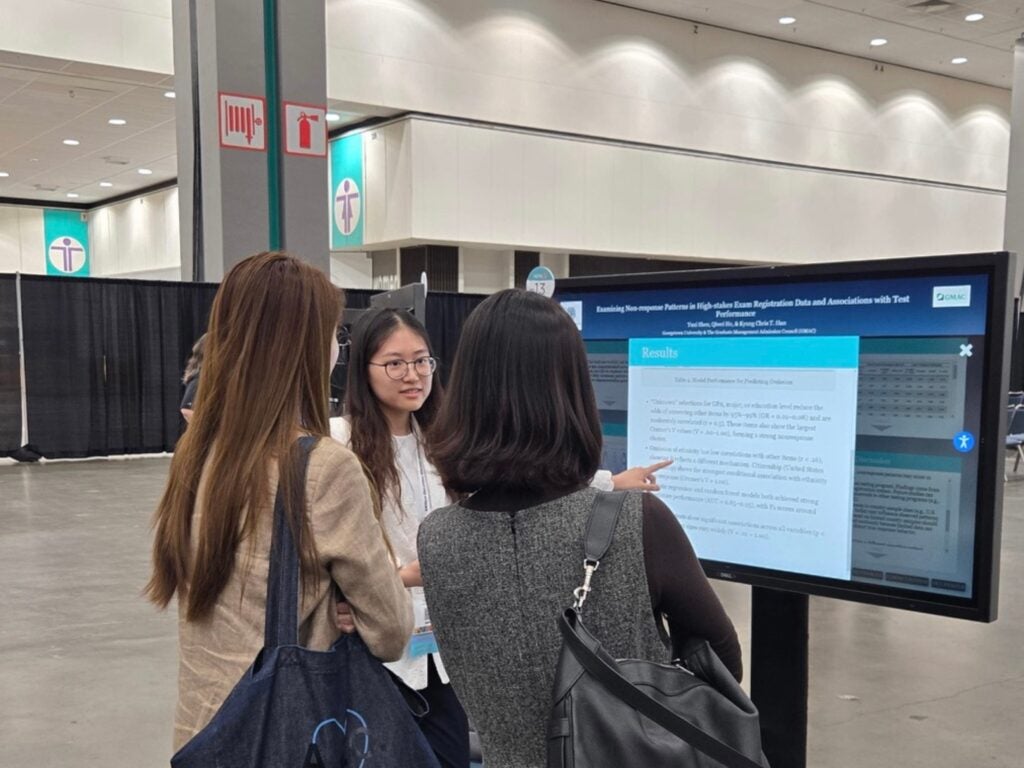
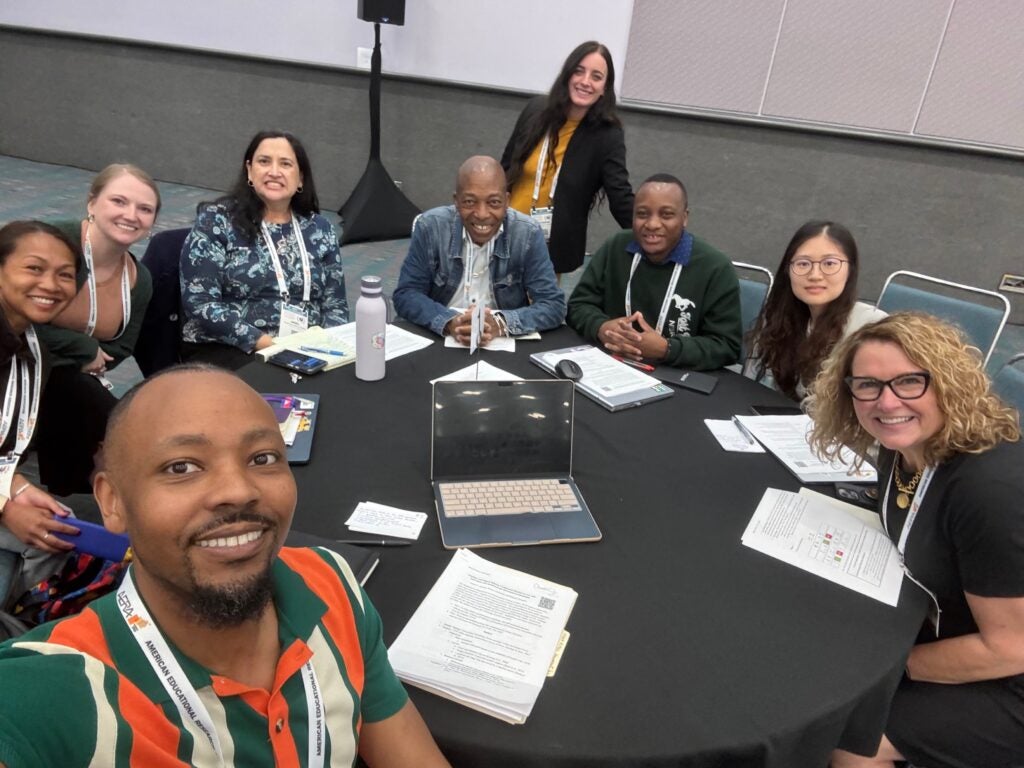
Attending conferences such as the American Educational Research Association Annual Meeting has been incredibly meaningful for my academic development. For me, it is not only about presenting my research, but also about learning how to communicate my ideas, receiving feedback, and understanding how my work connects to broader conversations in the field.
Since AERA is a large, education-focused conference, I had the opportunity to engage with researchers, teachers, educational institutions, and policymakers, and to learn from diverse perspectives on the same topic. I also value the opportunity to connect with researchers and peers who share similar interests, for example, during roundtable sessions, which have helped me better understand potential research directions and social needs. Being part of this academic community has made me feel more confident in my work and more motivated to continue pursuing research. Overall, attending AERA has helped me grow not only as a researcher but also as a more engaged and thoughtful member of the field.
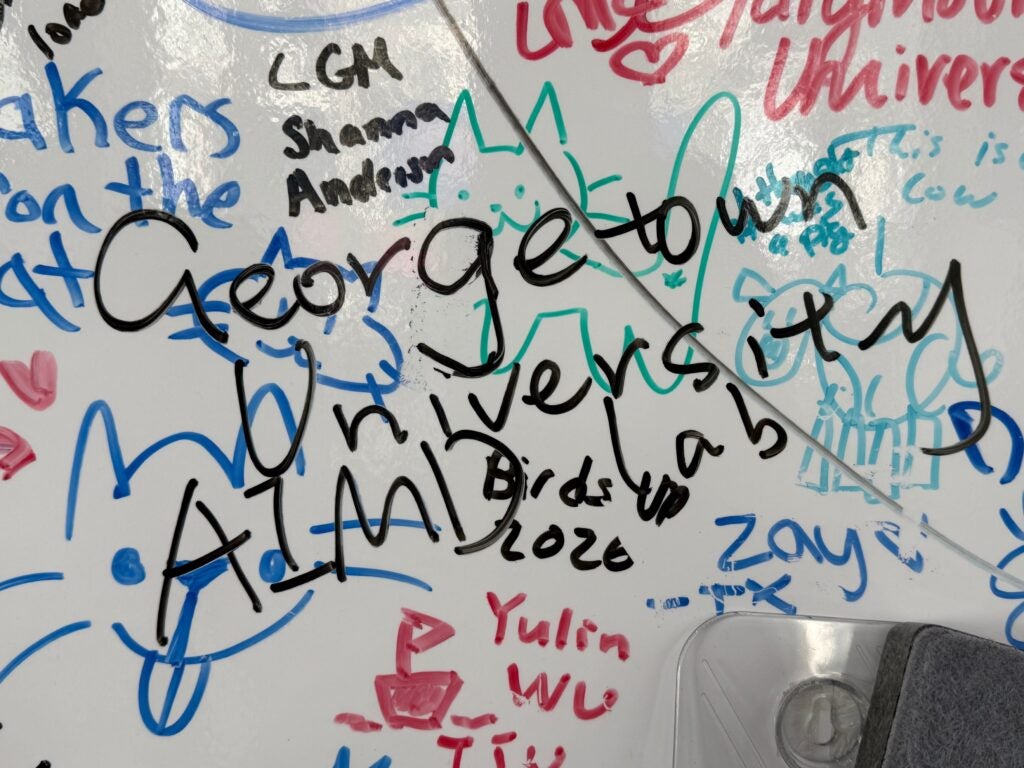
Samyukta Vakkalanka
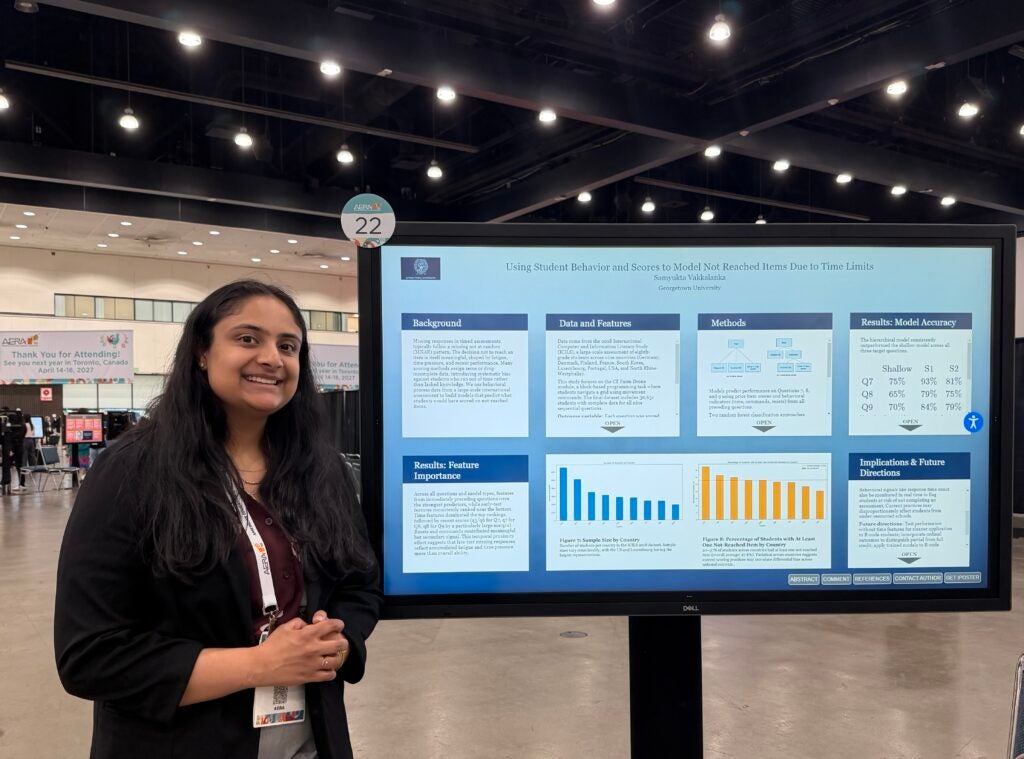
Last month, I attended the AERA conference in Los Angeles. I found out about the conference through Dr. Britt, who sent me the call for applications while I was working on a project applying hierarchical machine learning models to predicting missing scores in international assessments. Beyond AERA, I’ve found conferences through LinkedIn, peer recommendations in my program, and by talking to people at one conference about where to go next.
The application was a fleshed-out research report, but since it was an “in progress” gala, it didn’t have to be fully formed. I started with methods and results (what I was most confident on) and then built out my background, discussion, and conclusion before looping back to write the introduction. After an iterative review process with Dr. Britt, the paper went to a board of three professionals who evaluated it on rigor, writing maturity, and explanation of limitations.
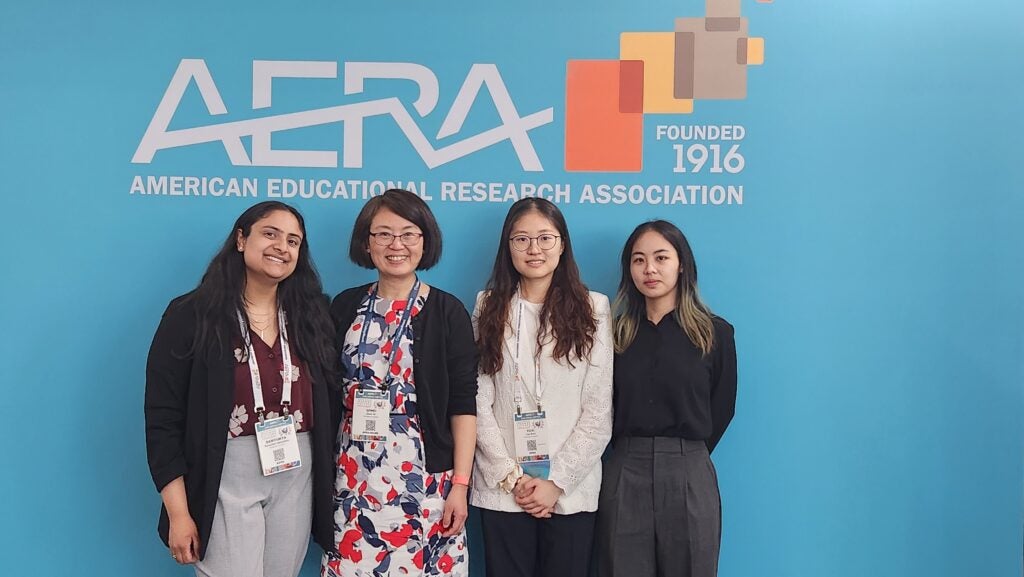
On the day of the presentation, I was in a big room at the LA Convention Center, giving talks to people from all sorts of backgrounds and targeting my pitch based on who I was talking to, like being less technical and more impact-focused with an educator, more methodological with a researcher. The biggest thing that helped was knowing my work inside and out.
Reflecting on it, attending conferences reminds you that your work exists in a broader landscape, that the papers you cite are written by real people building a foundation you’re contributing to. The connections are invaluable: I met the PI of the role where I just finished final interviews, spoke with companies and universities in the exhibit hall, attended PhD program receptions, and had real conversations with peers heading into doctoral programs about what that path actually looks like. I also talked to a startup founder in the education research space who asked for a follow-up conversation, a perspective I wouldn’t have gotten anywhere else.